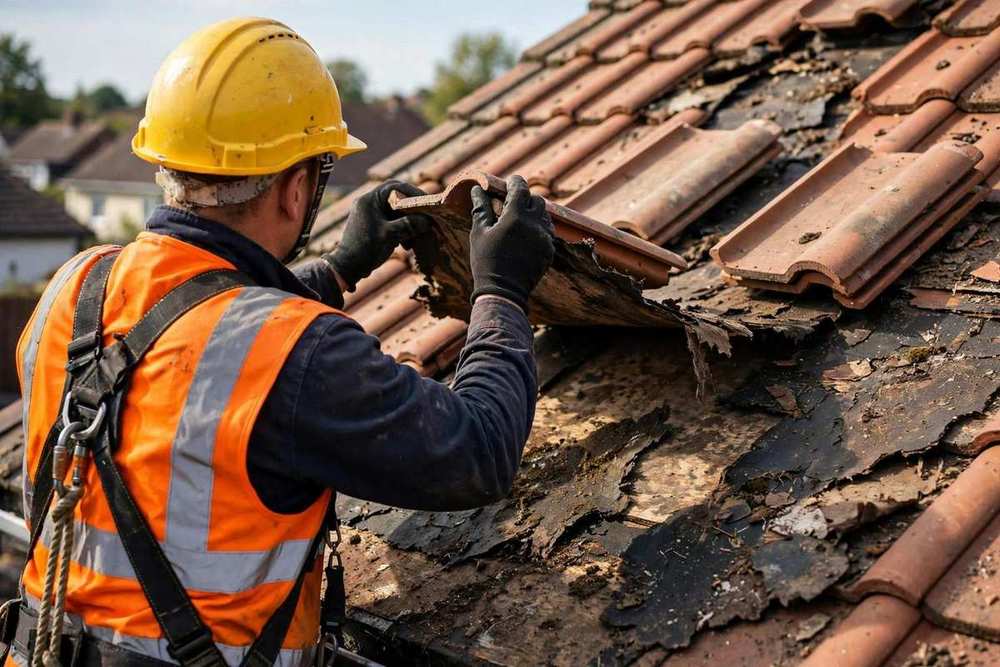
Full Tear-Off and Disposal
The old roof comes off in full and is disposed of, down to the deck, and the sound tile is set aside for re-laying instead of being thrown away with the worn underlayment.
Tile roofing is two jobs in one: the tile you see, which lasts 50 years or more, and the underlayment you do not, which is the waterproof layer and the part that actually fails.
The old roof comes off in full and is disposed of, down to the deck, and the sound tile is set aside for re-laying instead of being thrown away with the worn underlayment.
A new underlayment system goes across the whole deck before any tile goes back on, because the underlayment is the roof and the tile is the armour over it.
Flashing goes in at every transition, chimney, wall, valley and penetration, because a tile roof leaks at the transitions long before it leaks through the field.
The tile field and the ridge are installed with the tiles bedded and fastened to the pattern, and the sound tile that came off goes back on, with new tile only where the old is broken.
The permit is pulled and the final inspection closes the job, because a tile roof is heavy, structural, and on the City's record as well as ours.
Tile roofing in San Antonio really involves the underlayment more than the tile. Clay and concrete tile dominate Alamo Heights, Terrell Hills, The Dominion, Stone Oak and Shavano Park, and the tile itself lasts 50 years or more, but the underlayment underneath fails at 20 to 30 years. Concrete tile weighs 900 to 1,100 pounds per square against 200 or so for asphalt, so the structure is checked before any tile goes on, and a change from shingles to tile needs an engineer's report.
Tile suits the city’s Mediterranean and Spanish Eclectic homes, from Stone Oak to Monte Vista, and it handles heat and hail well. Cracked tile after a hail event needs replacing, and matching a discontinued profile takes time, which is why tile repair and salvage matters. A roof inspection will show whether the tile is sound and the underlayment is done, or whether the tile itself needs work.
How our tile roof installation process works: lift, renew, re-lay, in that order, so the sound tile is saved and the waterproof layer is new.
Schedule
Call (254) 645-5833 during hours and tell us the age of the tile and what you are seeing: leaks at valleys, cracked tiles, granule loss on the underlayment. We set a time to inspect.
Diagnose
We inspect every slope, photograph the tile and the underlayment, and check the attic side of the deck, so the scope is written from the roof in front of us.
Fix
You get a written scope for the tile work, naming the underlayment, the flashing work and the tile that is saved, so the decision is specific.
Finish
We lift the tile, renew the underlayment, re-lay the sound tile, photograph each layer, and walk the finished roof with you before we leave.
Tile cutter
We use the tile cutter on every tile roofing visit, because a tile cut cleanly fits the field and a tile cut roughly cracks at the edge.
Moisture meter
The moisture meter is how we check tile roofing work before it is covered up, so a soft spot in the deck is found while it can still be fixed.
Pry bar and roofing hammer
On a tile job the pry bar and roofing hammer lift the tile slope by slope, showing us the underlayment underneath before we decide what is saved and what is replaced.
Chalk line
We use the chalk line on every tile roofing visit to keep the courses straight, because a tile field that wanders is a tile field that leaks at the valleys.
Safety harness and roofing ladder
The safety harness and roofing ladder are how steep tile slopes get worked without rushing, because tile is heavy, slick when wet, and unforgiving of a hurried footing.
Extension ladder and roof brackets
On a tile job the extension ladder and roof brackets are how the tile gets to the roof and the old tile gets down without breaking the pieces that are going back on.
Caulking gun and roof sealant
We use the caulking gun and roof sealant on every tile job for the small gaps at penetrations and transitions, the places where a tile roof most often starts leaking.
Structure checked before quoting
We follow structure checked before quoting on tile work, because tile weighs six to eight times what asphalt weighs and the house has to be built for it.
Underlayment as the waterproof layer
Underlayment as the waterproof layer is the rule on every tile job we do in San Antonio: the tile sheds the weather, the underlayment stops the water.
New flashing at every transition
For tile roofing, new flashing at every transition is what keeps the roof dry through hail season and the next hot summer, because a tile roof leaks at the transitions.
Sound tile saved and re-laid
We follow sound tile saved and re-laid on tile work, because the tile that came off the roof is already weathered to match the street, and new tile is used only where the old is broken.
01
What we do: We lift the tile at the valley, check the underlayment underneath, and photograph what we find, because a leaking valley on a historic tile roof is usually an underlayment failure, not a tile failure.
The homeowner gets a written scope for the tile roofing work, with photos of the tile and the underlayment and a clear statement of what is saved and what is renewed.
02
What we do: We mark and photograph the cracked tile slope by slope, count the damage, and write a scope that names the tile and the underlayment, so the documentation matches the roof.
The roof is documented, the tile roofing work is scoped, and the homeowner decides with the evidence in hand rather than a guess.
03
What we do: We lift the tile, check the underlayment, and measure the remaining life of the layer underneath, because a 25-year-old tile roof with good tile is an underlayment job, not a new roof.
The homeowner keeps photos of the damage and a written scope for the tile roofing work, so the next step is a decision, not a guess.
04
What we do: We match the tile to the main house, profile and colour, and check the structure before we quote, because an addition in tile has to carry the same weight as the house it joins.
The tile roofing scope is written, the photos are in hand, and the homeowner can act on the roof with the evidence in front of them.
Tile is the roof of the city's Mediterranean and Spanish-style houses, and it is the roof of the streets where the houses were built for it: Alamo Heights, Terrell Hills, The Dominion, Stone Oak and Shavano Park.
Stone Oak
Stone Oak is one of the San Antonio neighbourhoods where tile roofing work is shaped by the houses themselves, with 1990s and newer streets, tile-heavy blocks, and HOA rules that name the material.
Monte Vista
Monte Vista homes bring their own tile roofing pattern, with early-20th-century houses, steep complex roofs, and many homes in a historic district where the material is reviewed first.
The Dominion
In The Dominion the tile roofing work follows the neighbourhood: a guard-gated master-planned community where tile is the expected roof and the HOA names the profile.
Encino Park
Encino Park is one of the San Antonio neighbourhoods where tile roofing work is shaped by the houses themselves, with far-north streets along the Bulverde Road corridor.
King William Historic District
King William Historic District homes bring their own tile roofing pattern, with Victorian and early-20th-century houses where the tile is part of the streetscape the city reviews.
Spring hail season across Bexar County
Spring hail season across Bexar County shapes how tile roofing work is done in this city, because large hail cracks individual tiles even when the underlayment underneath survives.
Summer UV and 100-degree heat
Summer UV and 100-degree heat is part of every tile job here, and the underlayment ages in the heat while the tile above it looks unchanged.
Tile weight and engineered structure
When we plan tile roofing work, tile weight and engineered structure is on the list from the first look, because concrete tile weighs 900 to 1,100 pounds per square and the house has to be built for it.
Historic district review requirements
Historic district review requirements shape how tile roofing work is done in this city: the material and the profile are approved before the work, and the sound tile is saved to the street-facing slopes.
Tile roofs fail underneath first, and the tile hides it: the underlayment wears out while the tile above it looks unchanged, which is why a tile inspection lifts tile instead of looking at it.
Problem
Underlayment worn out under good tile is the most common tile roof failure in San Antonio, because the tile lasts 50 years or more and the underlayment gives up at 20 to 30.
Our Fix
We lift the tile, renew the underlayment, and re-lay the sound tile, so the roof keeps the tile the street expects and gets a new waterproof layer underneath.
Problem
Hail-cracked tile and bruised underlayment travel together: the stone cracks the tile, the underlayment takes the impact, and the leak follows a season later.
Our Fix
We replace the hail-cracked tile and check the underlayment underneath, because a new tile over a bruised underlayment is a leak waiting for rain.
Problem
Failed flashing at chimneys and valleys is the most common leak source on a tile roof, because the flashing moves with the frame and the sealant gives up first.
Our Fix
We replace the failed flashing at chimneys and valleys during the tile work, and the scope names what was replaced and what was only resealed.
Problem
Wind-lifted tile at ridges and edges happens when the fastening has failed, and the lifted tiles around the bare patch are the next ones to go in the next wind.
Our Fix
We fix the cause of the wind-lifted tile at ridges and edges and photograph the repair, then check the slopes around it for the same failure.
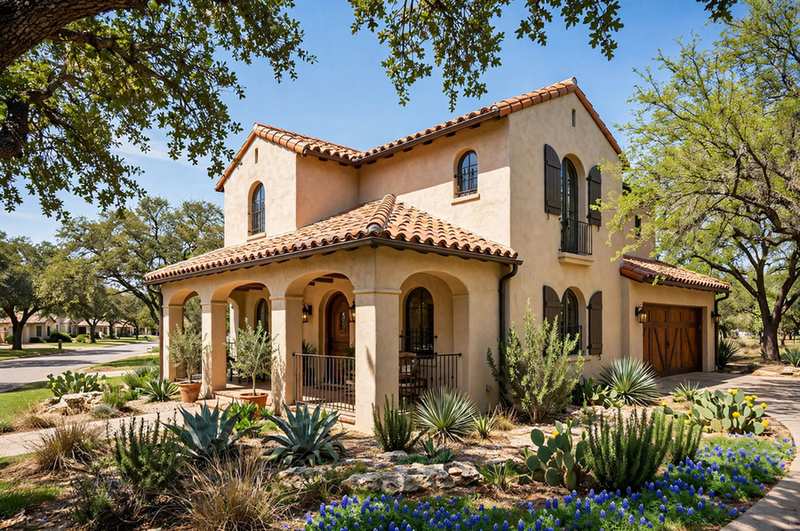
Tile lasts 50 years or more, handles heat and hail, and suits the city’s Mediterranean and Spanish Eclectic homes. The trade is weight and cost, and the underlayment clock. For cracked tile and matching, see tile repair and salvage.
Tile that outlasts the underlayment
Tile that outlasts the underlayment is one of the reasons homeowners choose our tile roofing work, because the tile is saved and the layer underneath is renewed, instead of throwing away a roof that is mostly sound.
Lift-and-relay saves sound tile
Lift-and-relay saves sound tile is built into the tile roofing work, not added on top of it, so the tile the street expects stays on the roof and only the worn layer underneath is new.
Flashing at every transition
With tile roofing, flashing at every transition is the difference between a roof that holds and a roof that leaks at the chimney, because a tile roof leaks at the transitions long before it leaks through the field.
A structure checked before quoting
A structure checked before quoting is one of the reasons homeowners choose our tile roofing work, because tile weighs six to eight times what asphalt weighs and the house has to be built for it.
Kbron Roofing holds 5.0 out of 5 from 18 Google reviews, all 5-star. Reviewers name Rene Vargas as their contact and describe honest, no-pressure service. Read short verbatim excerpts from those reviews in the Tile Roofing testimonials below.
We work on clay and concrete tile across San Antonio, from lift-and-relay to new tile, and we show you the underlayment before we cover it. Call (254) 645-5833 during hours.

Short verbatim excerpts from Google reviews by customers who chose our tile roofing work. All five readable reviewers gave 5 stars two months ago; three are quoted below.
"Rene took a genuine, zero-pressure approach. He is remarkably honest, transparent, and truly puts the customer's best interest first."
Imanii Roberson
★★★★★ · Homeowner, San Antonio · 2 months ago · Roof repair for storm and wind damage
"Rene is incredibly honest, hardworking, and dedicated to his customers. He takes the time to truly understand your needs and delivers quality work and results at a price that won't break your wallet."
Joe Favor
★★★★★ · Homeowner, San Antonio · 2 months ago · Roof inspection, roof installation, storm and wind repair
"He was so professional, walked me through the steps of how to make a claim with my insurance, and the whole process was super simple. The roof was installed in just one day, and the crew was incredibly clean and professional."
Donnovan Smith
★★★★★ · Homeowner, San Antonio · 2 months ago · Storm and wind repair, roof installation
Real answers to the questions we hear most often about tile roofing in San Antonio, including how long the tile and the underlayment each last.
Roof Replacement is the natural next step after tile roofing on a roof that needs more than one kind of attention.
View Roof ReplacementTile Repair and Salvage pairs with tile roofing on many San Antonio homes, and the two scopes are written together so nothing is missed.
View Tile Repair and SalvageWhere tile roofing work raises a question, roof inspection is often the answer, and we scope it in the same visit.
View Roof InspectionResidential Roofing is the natural next step after tile roofing on a roof that needs more than one kind of attention.
View Residential RoofingStone-Coated Steel Roofing pairs with tile roofing on many San Antonio homes, and the two scopes are written together so nothing is missed.
View Stone-Coated Steel RoofingWhere tile roofing work raises a question, roof repair is often the answer, and we scope it in the same visit.
View Roof RepairCall us at (254) 645-5833 or send a message and we will get back to you during business hours. We schedule tile work Monday to Saturday, 6 AM to 8 PM.
Phone
(254) 645-5833Address
6 Irongate Creek, San Antonio, TX 78238, United States, San Antonio, Texas
Hours
Mon–Sat: 6 AM – 8 PM