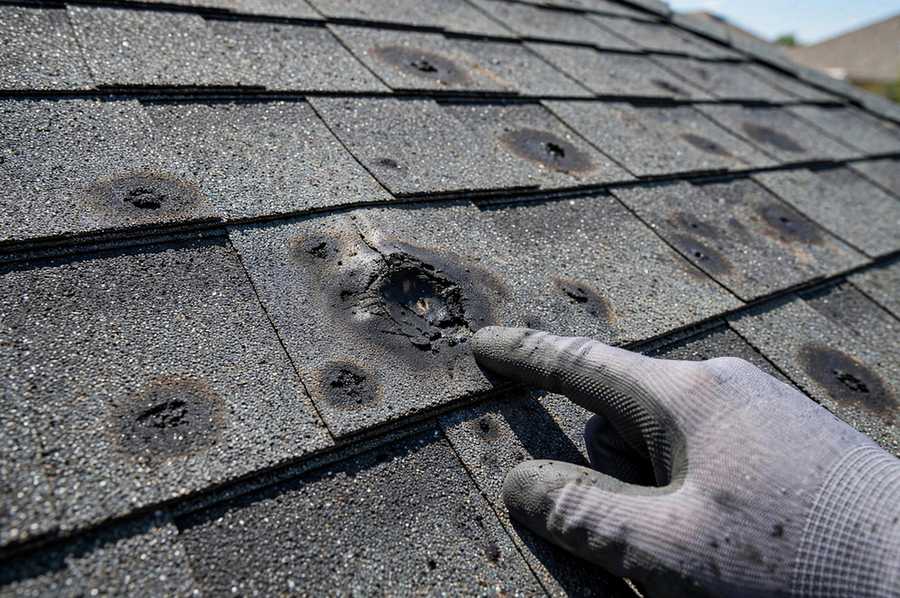
Full Roof Inspection
We inspect the full roof, slope by slope, instead of judging it from the driveway, because hail bruising does not show from the ground.
Hail damage repair starts with the count, not the patch. Every slope is walked, every hit is marked and photographed, and the scope is written from the count.
We inspect the full roof, slope by slope, instead of judging it from the driveway, because hail bruising does not show from the ground.
Damage documentation for insurance means the hits are marked, counted and photographed slope by slope, so the scope your insurer reviews matches the roof.
Shingles that are bruised or cracked are replaced and matched to the existing material where we can, so the repair blends with the rest of the slope.
Flashing and vents are re-sealed and checked too, because hail dents the flashing and the vents as surely as it bruises the shingles, and a dented vent is a leak waiting for rain.
Debris is cleaned up and the yard is magnet-swept, because a hail repair that leaves nails in the grass is not finished.
The final walk-through and photos close the job: the finished roof is walked with you, and the photos show the repair, slope by slope.
Hail damage roof repair in San Antonio really involves the record, not just the repair. About 85 percent of the large-hail reports in Bexar County fall in March through May, and the two anchors are 12 April 2016, when 4.5-inch stones fell in the costliest hailstorm in city history, and 3 May 2021, when a 5.5-inch stone fell near Sayers on the east side. The work is to find the bruising, count it, photograph it, and repair what the storm actually damaged, slope by slope.
Stone size decides the damage. Small hail knocks granules loose and shortens a shingle’s life; larger hail bruises the mat, cracks tile, and dents metal flashing and vents. A bruised shingle may not leak for a season or two, which is why the repair starts with an inspection, not a patch. If the damage is widespread, a roof replacement is the honest answer, and if the claim is involved, our insurance claims help page explains the process.
Our hail damage roof repair process: count it, photograph it, scope it, repair it, in that order, so the repair matches the storm.
Schedule
Call (254) 645-5833 during hours and tell us when the hail fell and what you are seeing: shingles in the yard, granules in the gutters, a stain inside. We set a time to inspect.
Diagnose
We inspect every slope, mark and photograph the hits, and check the flashing and the vents, so the scope is written from the roof, not from memory.
Fix
You get a written scope for the hail repair, naming the damaged slopes and the material, with the photos to back every line of it.
Finish
We finish the repair, photograph the details, sweep the yard, and walk the finished roof with you before we leave.
Moisture meter
On a hail job the moisture meter reads the deck before we trust our eyes, because a deck that looks dry from above can be damp underneath, and a damp deck is the repair that fails first.
Infrared camera
We use the infrared camera on every hail damage visit to find the damp decking and the soft spot before the finish covers them, when they can still be fixed.
Chalk for marking hail hits
The chalk for marking hail hits is how we check hail damage work before it is covered up, so every hit is counted on the roof, not estimated from the ground.
Pry bar and roofing hammer
On a hail job the pry bar and roofing hammer open the layers the bruising hides under, showing us the deck and the old flashing before we decide what stays.
Safety harness and roofing ladder
We use the safety harness and roofing ladder on every hail damage visit, because a hail repair is worked slope by slope and a rushed footing is how a good job turns into a bad day.
Tape measure and speed square
The tape measure and speed square are how we check hail damage work before it is covered up, marking the damaged areas so the scope names them plainly.
Slope by slope, with hits marked and counted
For hail damage roof repair, slope by slope, with every hit counted is what keeps the scope honest: the count is made on the roof, and the photos back it.
Photos your insurer or adjuster can review
We follow photos your insurer or adjuster can review on hail work, because the documentation is the scope, and the scope is what the roof actually needs.
Material matched where possible
Material matched where possible is the rule on every hail job we do in San Antonio, so the repair blends with the rest of the slope instead of standing out as a patch.
Flashing and vents checked too
For hail damage roof repair, flashing and vents checked too is what keeps the repair dry, because hail dents the flashing and the vents as surely as it bruises the shingles.
01
What we do: We walk the roof slope by slope, mark and photograph the hail hits, and check the gutters for the granules the storm washed off, because shingles in the yard and granules in the gutters are the first signs of a bruised roof.
The homeowner gets a written scope for the hail damage repair, with photos of the hits and a clear statement of what the storm did and what it did not.
02
What we do: We trace the stain from the attic side, check the flashing and the penetrations upslope, and name the entry point instead of patching the first wet spot.
The roof is documented, the hail damage repair is scoped, and the homeowner decides with the evidence in hand rather than a guess.
03
What we do: We re-inspect the roof slope by slope, count the hits again, and write a second scope that names what the first one missed, with the photos to back it.
The homeowner keeps photos of the damage and a written scope for the hail damage repair, so the next step is a decision, not a guess.
04
What we do: We read the inspection with you, slope by slope, and say plainly whether the hail damage is a repair or a replacement, because a closing does not wait for a guess.
The hail damage scope is written, the photos are in hand, and the homeowner can act on the roof with the evidence in front of them.
Hail season runs March through May, and the two storms every San Antonio roofer remembers are 12 April 2016 and 3 May 2021. The repair work is planned around that calendar, and the inspection is done slope by slope, not from the driveway.
Stone Oak
In Stone Oak the hail damage repair work follows the neighbourhood: 1990s and newer streets, tile-heavy blocks beside architectural shingle ones, and HOA rules that name the material and the colour.
Thousand Oaks
Thousand Oaks is one of the San Antonio neighbourhoods where hail damage repair work is shaped by the houses themselves, with 1980s streets on their second or third roof.
Westover Hills
Westover Hills homes bring their own hail damage repair pattern, with far-west master-planned streets where the roofs are newer and larger.
Encino Park
In Encino Park the hail damage repair work follows the neighbourhood: far-north streets along the Bulverde Road corridor, where architectural shingle and tile sit side by side.
Spring hail season, March through May
When we plan hail damage repair work, spring hail season across Bexar County is on the list from the first look, because about 85 percent of the large-hail reports fall in March through May.
85 percent of large-hail reports fall in March to May
85 percent of large-hail reports fall in March to May is the calendar the work is planned around: the hail season is short, the damage is counted in those months, and the repair follows the count.
Stone size decides the damage
Stone size decides the damage is part of every hail job here: a 1-inch stone can bruise asphalt, a golf-ball stone commonly damages roofs and siding, and a 2-inch stone cracks tile.
Hail damage is easy to miss from the ground and expensive to miss from the roof, because a bruised mat looks sound until the granules shed and the leak follows a season later.
Problem
Cracked and bruised shingles that leak later are the most common hail failure: the mat is broken, the granules shed, and the UV gets at the asphalt underneath.
Our Fix
We replace the cracked and bruised shingles that leak later and photograph the repair, so the scope names the damage while it is still small.
Problem
Dented flashing and vents are the hail damage most often missed, because the shingles get the attention and the flashing gets a glance, and a dented vent is a leak waiting for rain.
Our Fix
We check the dented flashing and vents on every hail job, and the scope names what is dented and what is sound.
Problem
Granule loss and dark streaks travel together after hail: the storm strips the granules, the sun ages the mat, and the streaks show where the moisture sits.
Our Fix
The fix for granule loss and dark streaks is to address the worn slopes, not to wash the roof, because the streaks are a symptom of a bruised mat.
Problem
Tile cracked by large hail is usually individual tiles, not the whole field, and the underlayment underneath often survives even when the tile above it does not.
Our Fix
We replace the tile cracked by large hail and check the underlayment underneath, because a new tile over a bruised underlayment is a leak waiting for rain.

A bruised shingle loses granules, then lets water in, then rots the deck. The repair is cheapest when the bruising is found early, and the documentation is strongest when the hits are fresh. If the damage covers several slopes, see when replacement makes more sense.
Hits marked and counted slope by slope
With hail damage roof repair, hits marked and counted slope by slope is the difference between a scope that matches the storm and a scope that guesses at it.
Photos your insurer can review
Photos your insurer can review is one of the reasons homeowners choose our hail damage repair work, because the documentation is the scope, and the scope is what the roof actually needs.
Flashing and vents checked too
Flashing and vents checked too is built into the hail damage roof repair work, not added on top of it, because hail dents the flashing and the vents as surely as it bruises the shingles.
A written scope you can keep
With hail damage roof repair, a written scope you can keep is the difference between a repair you hope is right and a repair you can see is right, slope by slope.
Kbron Roofing holds 5.0 out of 5 from 18 Google reviews, all 5-star. Reviewers name Rene Vargas as their contact and describe honest, no-pressure service. Read short verbatim excerpts from those reviews in the Hail Damage Roof Repair testimonials below.
We repair hail damage across San Antonio, from shingle bruising to cracked tile, and we document every hit. Call (254) 645-5833 during hours.
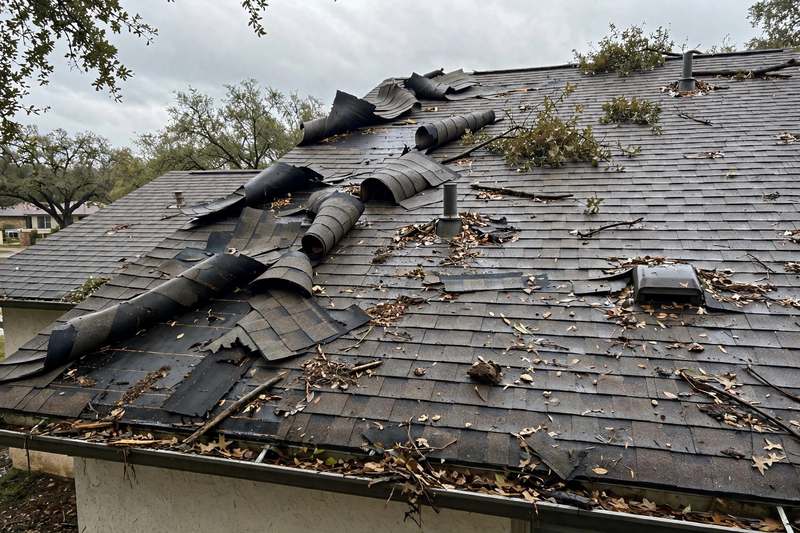
Short verbatim excerpts from Google reviews by customers who chose our hail damage roof repair work. All five readable reviewers gave 5 stars two months ago; three are quoted below.
"He was so professional, walked me through the steps of how to make a claim with my insurance, and the whole process was super simple. The roof was installed in just one day, and the crew was incredibly clean and professional."
Donnovan Smith
★★★★★ · Homeowner, San Antonio · 2 months ago · Storm and wind repair, roof installation
"He worked with my insurance and made it so easy. Definitely recommend them to anyone, just hear them out because I am very glad I did."
Joshua Garza
★★★★★ · Homeowner, San Antonio · 2 months ago · Storm and wind repair, roof installation
"They started early in the morning and finished the same day. They cleaned up very well. They were extremely knowledgeable and patient."
Doris Longoria
★★★★★ · Homeowner, San Antonio · 2 months ago · Roof installation after hail damage
Real answers to the questions we hear most often about hail damage in San Antonio, including when hail season runs and what size stone damages a roof.
Where hail damage roof repair work raises a question, roof replacement is often the answer, and we scope it in the same visit.
View Roof ReplacementStorm Damage Roof Repair is the natural next step after hail damage roof repair on a roof that needs more than one kind of attention.
View Storm Damage Roof RepairRoof Inspection pairs with hail damage roof repair on many San Antonio homes, and the two scopes are written together so nothing is missed.
View Roof InspectionWhere hail damage roof repair work raises a question, roof repair is often the answer, and we scope it in the same visit.
View Roof RepairInsurance Claims Help is the natural next step after hail damage roof repair on a roof that needs more than one kind of attention.
View Insurance Claims HelpClass 4 Impact-Resistant Shingles pairs with hail damage roof repair on many San Antonio homes, and the two scopes are written together so nothing is missed.
View Class 4 Impact-Resistant ShinglesCall us at (254) 645-5833 or send a message and we will get back to you during business hours. We schedule hail work Monday to Saturday, 6 AM to 8 PM.
Phone
(254) 645-5833Address
6 Irongate Creek, San Antonio, TX 78238, United States, San Antonio, Texas
Hours
Mon–Sat: 6 AM – 8 PM