Certificate of Appropriateness
A Certificate of Appropriateness is required for exterior work in a historic district, in addition to the building permit, and the roof work is sequenced around it.
Historic district roofing is a review first and a roof second. The review, the in-kind replacement, and the tile salvage are all decided before the tear-off, not discovered during it.
A Certificate of Appropriateness is required for exterior work in a historic district, in addition to the building permit, and the roof work is sequenced around it.
In-kind replacement means the new roof matches the old in scale, colour, texture, profile and style, because the district is a streetscape and the roof is part of it.
Material and profile changes go to the Historic and Design Review Commission at a public hearing, while like-for-like work is usually approved by the preservation office staff.
Tile salvage to street-facing slopes means the sound tile that comes off goes back on the slopes the street sees, and new tile is used only where the old is broken.
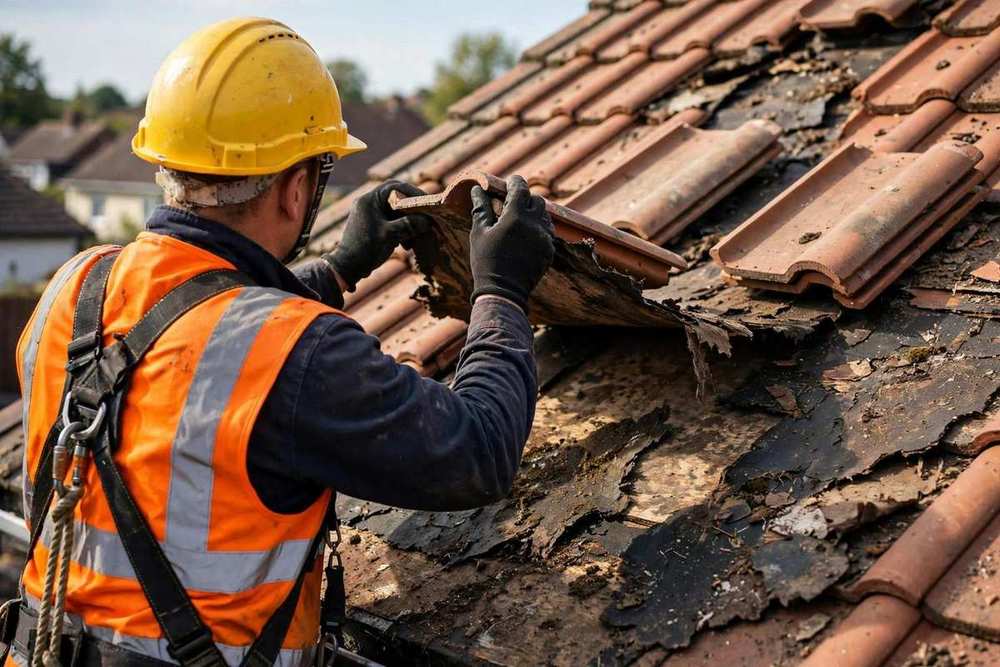
Underlayment renewal happens under the saved tile, because the tile lasts 50 years or more and the underlayment gives up at 20 to 30, and the renewal is the roof.
The final walk-through and photos close the job: the finished roof is walked with you, and the photos show the work, slope by slope.
Historic district roofing in San Antonio really involves the review. The city has 32 locally designated historic districts, from the 3-parcel Leon Springs district to the Mission district that runs about seven miles along the south side, and exterior work in any of them needs the district's approval in addition to the building permit. Like-for-like work is usually approved by the preservation office staff, while a material or profile change goes to the Historic and Design Review Commission at a public hearing, and the guidelines say to consider replacement when more than 25 to 30 percent of the roof is damaged.
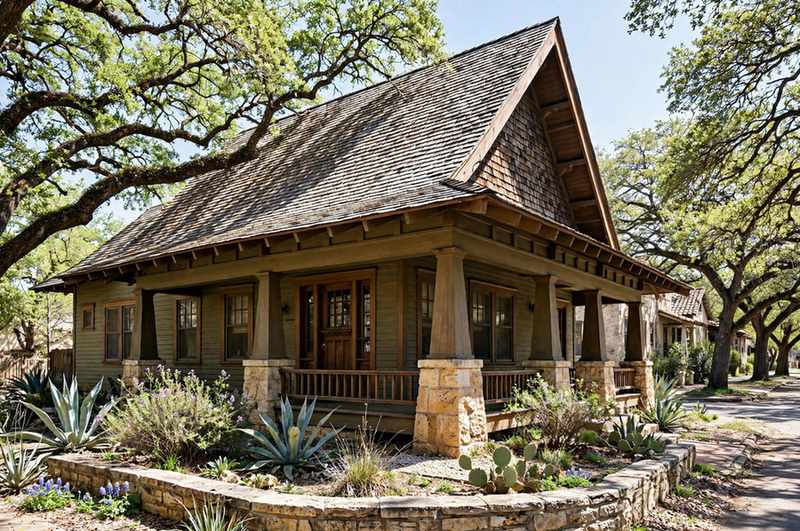
Monte Vista is the district to know: one of the largest historic districts in the nation, 524 acres, with 18 styles from Craftsman of 1905 to 1930 to Tudor and Spanish Eclectic, steep shingle and tile roofs under mature oaks. King William, the city’s oldest residential district, holds 1870s to 1890s German merchant houses in Queen Anne and Victorian styles, with steep, complex roofs. Dignowity Hill, on the east side, is an Office of Historic Preservation district of 1910s to 1940s bungalows. Each has its own look, and the roof has to keep it. See tile repair and salvage for the tile work itself.
How our historic district roof process works: review first, tear-off second, so the roof that goes on is the roof that was approved.
Schedule
Call (254) 645-5833 during hours and tell us the district and the age of the roof. We set a time to inspect, and the inspection covers every slope and the attic side of the deck.
Diagnose
We inspect the roof, photograph the tile and the underlayment, and check the district status of the address, so the scope is written from the roof and the review it needs.
Fix
You get a written scope for the historic roof, naming the material, the underlayment, the salvage and the review, so the decision is specific.
Finish
We get the approval, lift the tile, renew the underlayment, re-lay the sound tile, and walk the finished roof with you before we leave.
Tile cutter
We use the tile cutter on every historic district visit, because a tile cut cleanly fits the field and a tile cut roughly cracks at the edge.
Moisture meter
The moisture meter is how we check historic district work before it is covered up, so a soft spot in the deck is found while it can still be fixed.
Pry bar and roofing hammer
On a historic job the pry bar and roofing hammer lift the tile slope by slope, showing us the underlayment underneath before we decide what is saved and what is replaced.
Chalk line
We use the chalk line on every historic district visit to keep the courses straight, because a tile field that wanders is a tile field that leaks at the valleys.
Safety harness and roofing ladder
The safety harness and roofing ladder are how steep historic slopes get worked without rushing, because tile is heavy, slick when wet, and unforgiving of a hurried footing.
Caulking gun and roof sealant
On a historic job the caulking gun and roof sealant close the small gaps at penetrations and transitions, the places where a historic roof most often starts leaking.
Review first, tear-off second
We follow review first, tear-off second on historic district work, because the review comes before the work, not after it.
In-kind where possible, hearing where not
In-kind where possible, hearing where not is the rule on every historic job we do in San Antonio: like-for-like work goes through the preservation office staff, and a material change goes to the Commission.
Sound tile saved to street-facing slopes
For historic district roofing, sound tile saved to street-facing slopes is what keeps the streetscape, because the tile the street sees is the tile that came off the roof.
Underlayment renewed under saved tile
We follow underlayment renewed under saved tile on historic work, because the tile lasts 50 years or more and the underlayment gives up at 20 to 30, and the renewal is the roof.
01
What we do: We lift the tile at the valley, check the underlayment underneath, and photograph what we find, because a leaking valley on a historic clay tile roof is usually an underlayment failure, not a tile failure.
The homeowner gets a written scope for the historic district roofing work, with photos of the tile and the underlayment and a clear statement of what is saved and what is renewed.
02
What we do: We measure the steep shingle roof against the guidelines, check the material and the profile, and write a scope that replaces it in kind, so the roof the street sees is the roof that was there.
The roof is documented, the historic district roofing work is scoped, and the homeowner decides with the evidence in hand rather than a guess.
03
What we do: We lift the tile, check the underlayment, and measure the remaining life of the layer underneath, because a 1910s bungalow with failing underlayment is an underlayment job, not a new roof.
The homeowner keeps photos of the damage and a written scope for the historic district roofing work, so the next step is a decision, not a guess.
04
What we do: We read the Commission's process with you, name the material change, and write a scope that goes to the hearing, because a shingle-to-metal change in a district is a decision the Commission makes, not a swap.
The historic district roofing scope is written, the photos are in hand, and the homeowner can act on the roof with the evidence in front of them.
The review is the job before the job. In-kind replacement goes through the preservation office staff, a material or profile change goes to the Historic and Design Review Commission, and the roof work is sequenced around the review, not the other way around.
King William Historic District
King William Historic District is one of the San Antonio neighbourhoods where historic district roofing work is shaped by the houses themselves, with Victorian houses from the 1870s to the 1890s along the river.
Monte Vista
Monte Vista homes bring their own historic district roofing pattern, with early-20th-century houses, 18 architectural styles across 524 acres, and steep, complex roofs under mature live oaks.
Dignowity Hill
In Dignowity Hill the historic district roofing work follows the neighbourhood: Victorian-era houses on the Near East Side, named for Dr. Anthony Dignowity.
Tobin Hill
Tobin Hill is one of the San Antonio neighbourhoods where historic district roofing work is shaped by the houses themselves, with the Pearl district beside it and a mix of residential and commercial roofs.
Beacon Hill
Beacon Hill homes bring their own historic district roofing pattern, with bungalows between downtown and Alamo Heights and modest pitches under mature trees.
32 local historic districts
32 local historic districts shapes how historic district roofing work is done in this city, from the 3-parcel Leon Springs district to the Mission district that runs about seven miles along the south side.
Certificate of Appropriateness required
Certificate of Appropriateness required is part of every historic job here, and it is required in addition to the building permit, not instead of it.
Staff-level review for in-kind work
When we plan historic district roofing work, staff-level review for in-kind work is on the list from the first look, because like-for-like work is usually approved by the preservation office staff.
Commission hearing for material changes
Commission hearing for material changes shapes how historic district roofing work is done in this city, because a material or profile change goes to the Historic and Design Review Commission at a public hearing.
Historic roofs fail underneath first, and the tile hides it: the underlayment wears out while the tile above it looks unchanged, and the review decides what the new roof has to look like.
Problem
Underlayment worn out under good tile is the most common historic roof failure, because the tile lasts 50 years or more and the underlayment gives up at 20 to 30.
Our Fix
We lift the tile, renew the underlayment, and re-lay the sound tile, so the roof keeps the tile the street expects and gets a new waterproof layer underneath.
Problem
Leaking valleys on steep, complex roofs are the most common leak source on a historic roof, because the valleys carry the water from several slopes at once.
Our Fix
We replace the flashing in the leaking valleys on steep, complex roofs during the historic work, and the scope names what was replaced and what was only resealed.
Problem
Cracked tile that needs matching is usually individual tiles, not the whole field, and the match is made from salvage, because the profile is often no longer made.
Our Fix
We match the cracked tile that needs matching from salvage, so the repair blends with the roof the street sees.
Problem
A material change that needs a hearing is not a swap: a shingle-to-metal change in a district goes to the Historic and Design Review Commission, and the roof work waits for the decision.
Our Fix
We write the scope for a material change that needs a hearing, and the work is sequenced around the hearing, not the other way around.

The roof is part of the streetscape, and the city reviews it before it changes. Doing the review first costs weeks; doing the roof first costs the roof. If the tile itself needs work, see tile repair and salvage.
Review first, tear-off second
Review first, tear-off second is one of the reasons homeowners choose our historic district roofing work, because the review comes before the work, and a roof torn off before the review is a roof that has to wait.
In-kind work at staff level
In-kind work at staff level is built into the historic district roofing work, not added on top of it, so like-for-like work is approved by the preservation office staff without a hearing.
Sound tile saved to the street
With historic district roofing, sound tile saved to the street is the difference between a roof that keeps the streetscape and a roof that changes it, because the tile the street sees is the tile that came off the roof.
A 2-to-4-week buffer planned in
A buffer of weeks planned in for the review is one of the reasons homeowners choose our historic district roofing work, because the review takes time and the job is sequenced around it.
Kbron Roofing holds 5.0 out of 5 from 18 Google reviews, all 5-star. Reviewers name Rene Vargas as their contact and describe honest, no-pressure service. Read short verbatim excerpts from those reviews in the Historic District Roofing testimonials below.
We work on historic roofs across San Antonio, from King William to Monte Vista to Dignowity Hill, and the review stays in front of the tear-off. Call (254) 645-5833 during hours.
Short verbatim excerpts from Google reviews by customers who chose our historic district roofing work. All five readable reviewers gave 5 stars two months ago; three are quoted below.
"Rene is incredibly honest, hardworking, and dedicated to his customers. He takes the time to truly understand your needs and delivers quality work and results at a price that won't break your wallet."
Joe Favor
★★★★★ · Homeowner, San Antonio · 2 months ago · Roof inspection, roof installation, storm and wind repair
"Rene took a genuine, zero-pressure approach. He is remarkably honest, transparent, and truly puts the customer's best interest first."
Imanii Roberson
★★★★★ · Homeowner, San Antonio · 2 months ago · Roof repair for storm and wind damage
"He was so professional, walked me through the steps of how to make a claim with my insurance, and the whole process was super simple. The roof was installed in just one day, and the crew was incredibly clean and professional."
Donnovan Smith
★★★★★ · Homeowner, San Antonio · 2 months ago · Storm and wind repair, roof installation
Real answers to the questions we hear most often about historic district roofing in San Antonio, including the difference between staff review and a hearing.
Tile Repair and Salvage is the natural next step after historic district roofing on a roof that needs more than one kind of attention.
View Tile Repair and SalvageTile Roofing pairs with historic district roofing on many San Antonio homes, and the two scopes are written together so nothing is missed.
View Tile RoofingWhere historic district roofing work raises a question, roof replacement is often the answer, and we scope it in the same visit.
View Roof ReplacementPermits and Codes is the natural next step after historic district roofing on a roof that needs more than one kind of attention.
View Permits and CodesRoof Inspection pairs with historic district roofing on many San Antonio homes, and the two scopes are written together so nothing is missed.
View Roof InspectionWhere historic district roofing work raises a question, hoa approval help is often the answer, and we scope it in the same visit.
View HOA Approval HelpCall us at (254) 645-5833 or send a message and we will get back to you during business hours. We schedule historic district work Monday to Saturday, 6 AM to 8 PM.
Phone
(254) 645-5833Address
6 Irongate Creek, San Antonio, TX 78238, United States, San Antonio, Texas
Hours
Mon–Sat: 6 AM – 8 PM